



 6 Min
6 Min In Conditions

Follow this topic

Bookmark

Record learning outcomes
As May’s heatwave has highlighted, customers don’t just need to heed sun safety advice when travelling abroad – they need to take care when they are spending a day outdoors in the UK, too.
The recent high temperatures reminded us of just how quickly dehydration, heatstroke and sunburn can strike close to home.
The UK Health Security Agency (UKHSA) issued amber and yellow heat-health alerts just before the May bank holiday weekend, warning the public about extremely high temperatures and reiterating the importance of taking care during intense heat waves.
Sadly, some people made the headlines for not following this advice, but there are ways to prevent dehydration and heatstroke that pharmacy teams can share with customers.
For those who are travelling this holiday season, you can also pass on information on food and water safety, as well as the latest advice for those visiting malaria areas.
Burning up
Sunburn is a perennial summer hazard for which customers seek pharmacy advice – in terms of both prevention and treatment. People often get caught off-guard on holiday, thinking that the sun is not hot enough for them to burn, or that they will be okay with only one application of sunscreen a day.
Both of these beliefs are often wrong, however, and sunburn can be extremely painful, not to mention potentially cancer-causing. Farzana Haq, clinical pharmacist and independent prescriber, says that pharmacy teams should recommend regular use of broad-spectrum sunscreen (SPF 30 or higher), reapplied every two hours and after swimming.
Broad spectrum sunscreen is important, as it protects the wearer’s skin against both UVA and UVB rays. UVA rays are longer wavelength rays and penetrate deep into the skin’s dermis, whereas UVB rays are shorter and reach only the outer layer of the skin.
UVA radiation makes up 95 per cent of the UV rays that make it to the earth’s surface. It contributes to skin cancer, skin ageing and wrinkles, as well as triggering the melanin inside the skin that creates a suntan.
Customers should be reminded to check the expiration date of their sunscreen, as those past their expiry date will be ineffective. They should also check for a PAO (period after opening) symbol – a small pack graphic that indicates how many months a product remains safe and effective to use after it is first opened.
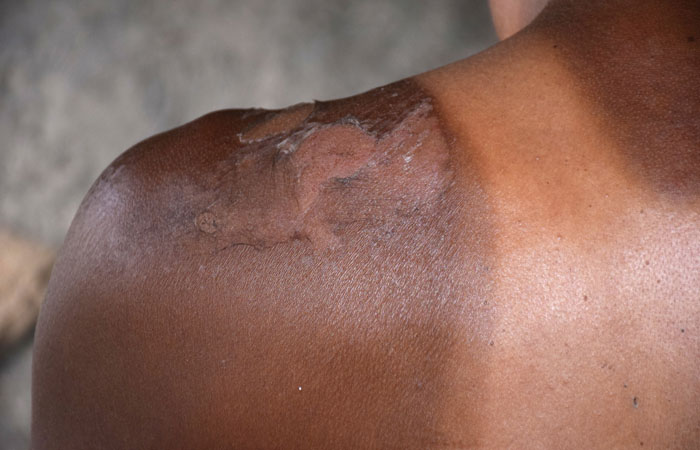
Sunburn symptoms are, most of the time, obvious, but can depend on the person’s skin tone.
“Sunburn typically presents with skin that feels hot to touch, pain, tenderness or discomfort, and in more severe cases, blistering, swelling and systemic symptoms such as fever or chills,” says Farzana.
“Peeling or flaking of the skin often occurs a few days after the initial exposure. In people with lighter skin, sunburn commonly appears as red or pink skin.
In people with darker skin tones, visible colour change can be less obvious, and sunburn may instead present with warmth, tenderness, irritation, or later peeling. This can make early recognition more difficult, so pharmacy teams should focus on symptoms rather than colour alone.”
Sunburn usually gets better within seven days, but there are things customers can do to ease the symptoms:
- Cool the skin with a cool shower, bath or damp towel (parents and carers should take care not to let babies or young children get too cold)
- Apply aftersun cream, spray or gel, or an unperfumed moisturiser
- Avoid alcohol and drink plenty of water
- Take painkillers like paracetamol or ibuprofen if suitable and the sunburn is painful
- Keep sunburned skin covered up and out of the sun as much as possible until it has fully healed.
Sunscreen of at least SPF 30 should be applied every two hours when in the sun to avoid skin damage.
“Alcohol can significantly increase the risk of dehydration and heat-related illness”
Quenching a thirst
Mild dehydration can lead to headaches, fatigue, and dizziness – but if it is more severe, it can be extremely serious.
Dehydration occurs when the body loses more fluid than can be taken in, resulting in a lack of the water and electrolytes it needs to function normally.
Symptoms include thirst, dry mouth and lips, dark and concentrated urine, and reduced urine output.
“More severe dehydration may present with confusion, tachycardia [a fast heartbeat] or hypotension [low blood pressure],” says Farzana.
It is important that anyone with symptoms of dehydration rehydrates themselves as soon as possible by drinking something that can also replace the sugar, salts and minerals the body has lost. Rehydration sachets from the pharmacy are ideal recommendations.
Effervescent hydration tablets can also be taken preventatively. If customers are going to be active on a hot day, or are simply worried about dehydration, taking hydration tablets can help – but always check the suitability of these products for the customer with the pharmacist as they are not suitable for everyone.
Customers who have become dehydrated should slowly sip on their drink, gradually building up to drinking more.
Drinking too quickly can lead to nausea. Caffeine and alcohol should be avoided – these will worsen the dehydration.
“Alcohol can significantly increase the risk of dehydration and heat-related illness,” says Farzana.
For those who do like a beer or a cocktail in the sun, recommend that they:
- Alternate alcoholic drinks with water
- Avoid excessive alcohol intake, particularly during peak times of heat
- Be aware that alcohol may impair judgement around
sun exposure.
There is also an increased risk of sunburn due to reduced awareness of time in the sun. “Customers should be encouraged to prioritise hydration and moderation,” notes Farzana.
Beware malaria
There are few sounds more fear-inducing than the insistent buzz of a mosquito in the room when you’re trying to fall asleep.
Flapping around in the dark trying to squish the deliverer of itchy bites is not only frustrating but also a poor form of protection against these pesky insects.
In some areas, however, mosquitoes pose an even greater threat: they carry malaria, a disease with potentially nasty consequences.
Malaria is a serious infection that is spread mainly by mosquitoes in some parts of the world. If not diagnosed and treated quickly, an infected person can die.
It is crucial that pharmacy teams warn customers travelling to malaria destinations how to prevent being bitten by a mosquito, and the first symptoms of malaria that signal the need for urgent medical care. They should not wait until they return home to receive care.
Malaria is not active in the UK, but in 2023, 2,106 cases were reported in people returning to the UK from abroad.
This was 26 per cent more than in 2022, and the highest total number of cases seen in the UK since 2001.
Six deaths were reported in 2023 – the same as the annual average number of UK deaths from malaria between 2014 and 2023.
Customers should be aware that the following tropical regions are home to mosquitoes that carry the disease:
- Much of Africa and Asia
- Central and South America
- The Dominican Republic and Haiti
- Parts of the Middle East
- Some Pacific islands.
For an up-to-date list of countries where malaria infection is possible, point customers towards the National Travel Health Network and Centre (NaTHNaC) factsheet: travelhealthpro.org.uk/factsheet/52/malaria.
Symptoms of malaria include a high temperature; feeling hot, cold or shivery; sweating; headaches and feeling confused; feeling very tired and sleepy, especially in children; feeling or being sick, tummy pain and diarrhoea; loss of appetite; muscles pains; yellow whites of the eyes or skin; a sore throat, cough and difficulty breathing.
These symptoms usually appear between seven to 18 days after being bitten by an infected mosquito, so may not occur until the traveller has returned home.
Anyone who will be travelling to a malaria-risk area should take antimalarial medicine before they go. This needs to be taken a few days or sometimes weeks before travelling, as well as for a few days/weeks after returning.
Pharmacy teams can also recommend that customers:
- Use a suitable insect repellent (the NHS advises at least 50% DEET-based)
- Sleep under mosquito nets treated with insect repellent
- Wear long-sleeved clothing and trousers to cover arms and legs, especially in the evening, when mosquitoes are most active.
Certain people are at a higher risk of becoming very ill from malaria:
- Anyone who is pregnant (malaria can also be passed from mother to unborn baby)
- Young children
- People aged 65 and over
- Anyone with a weak immune system
- People who do not have a spleen.
For some customers, the risk may be too great and they may be advised by travel clinics to avoid such areas altogether.
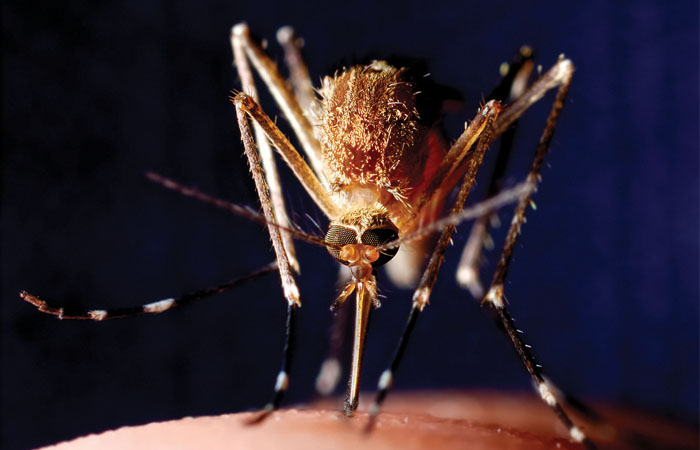
Malaria is transmitted through the bite of an infected female Anopheles mosquito.
Heat exhaustion versus heatstroke
Dehydration, sunburn and excessive time spent in the sun can all combine to cause heat exhaustion and, in extreme cases, heatstroke.
Heat exhaustion occurs when the body overheats, and loses too much water through excessive sweating.
“Heat exhaustion does not usually need emergency medical help if you can cool down within 30 minutes,” says the NHS.
“If it turns to heatstroke, it needs to be treated as an emergency.”
Pharmacy teams can advise customers concerned about heat exhaustion to do the following to help them cool down:
- Move them to a cool place
- Remove all unnecessary clothing, like jackets and socks
- Drink a sports or rehydration drink, or water
- Cool the skin by spraying or sponging it with cool water, and using a fan. Cold packs wrapped in a cloth and put under the armpits and on the neck are also effective.
It is imperative that someone stays with a person with suspected heat stroke until they have cooled down. If they do not cool down within 30 minutes, the situation needs to be escalated.
Farzana explains that symptoms of heatstroke that require urgent attention are as follows:
- A high body temperature (often >40°C)
- Confusion, agitation or altered consciousness
- Hot, flushed skin (may be dry or sweating)
- Headache, dizziness
- Nausea or vomiting.
“Pharmacy teams should advise immediate emergency care if heatstroke is suspected,” says Farzana.
In general, customers can protect themselves and practice sun safety by using sunscreen throughout the day, avoid being in the sun during peak sun hours (typically 11am to 3pm), wearing protective clothing, hats and sunglasses, maintaining hydration throughout the day, and taking breaks in shaded or cool environments.
“Customers travelling with children, older adults, or people with long-term conditions should be particularly cautious,” adds Farzana.
“Pharmacy teams should advise immediate emergency care if heatstroke is suspected”
Food and water safety
Going on holiday is a savoured time for any customer, and no one wants it to be ruined by something like nausea or diarrhoea caused by poor food and water safety.
To avoid any risks of this occurring, Farzana Haq, clinical pharmacist and independent prescriber, advises: “In areas where water safety is uncertain, customers should drink bottled water or appropriately treated water, avoid ice in drinks unless the source is known to be safe, use bottled water for brushing teeth, and avoid raw or uncooked foods that may have been washed in unsafe water.”
Farzana also stresses that it’s important for pharmacy teams to reinforce the importance of hand hygiene and safe food practices.
It’s also important to consider the cleanliness of swimming or bathing water.
According to the National Travel Health Network and Centre (NaTHNaC): “Swallowing or inhaling contaminated water in inadequately treated swimming pools, hot tubs and spas can also transmit pathogens that cause diarrhoea, vomiting and infection of the ears, eyes, skin or respiratory system.”
When it comes to food safety whilst travelling, NaTHNaC says: “Recently prepared, thoroughly cooked food that is served piping hot, fruit that can be peeled by the traveller (such as bananas and oranges) and pasteurised dairy produce such as yoghurts, milk and cheese are good options for travellers.”
The following foods, however, are prone to contamination with pathogens (bugs) that can cause traveller’s diarrhoea, and should be avoided, advises NaTHNaC:
- Salads
- Uncooked fruit and vegetables
- Fresh or cooked food that has been left uncovered in warm environments or exposed to flies (e.g. buffets)
- Raw or undercooked meat, fish or shellfish, including oysters
- Unpasteurised dairy products like milk, cheese, ice cream and yoghurt
- Food from street traders, unless thoroughly cooked in front of the traveller and served hot on clean dishes.
Helpful advice
Sometimes, despite customers trying their best to avoid picking up a traveller’s bug, they may end up needing to manage symptoms of sickness and diarrhoea. “For mild to moderate symptoms, oral rehydration salts are the first-line to prevent dehydration,” says Farzana.
For diarrhoea, loperamide may be suitable for short-term symptom control, where appropriate, Farzana adds.
Always check with the pharmacist before providing this medicine as some people may not be able to take it.
“Customers should seek medical advice if symptoms persist beyond 48 to 72 hours, there is blood in their stool, a high fever develops, or the patient is vulnerable – for example, they are elderly, pregnant or immunocompromised,” says Farzana.

Share:


In Conditions